Creating a future where AI improves the human experience. Not replaces it.
AI is driving the largest workforce transition in human history. Every other company is racing to use it to replace workers. We are racing to build the infrastructure that lifts them instead.
The whole world is asking how to get displaced workers back into jobs. We are asking a different question.
Today, 8 billion people generate about $105 trillion in global GDP. In the near future, a fraction of that workforce, augmented by AI and robotics, will produce the same output. The value does not disappear. It concentrates in the companies that own the technology.
So what happens to everyone else?
Right now, the systems we have around work do not even function well at baseline. Displaced workers spend six months or more trying to get an interview. There is no coherent retraining layer. No continuous guidance. No real infrastructure for transition.
And that is before displacement becomes constant.
Jobs are no longer replaced once. The underlying work keeps shifting. Roles evolve, shrink, disappear, and reappear in new forms. Even the next job is not stable.
We are doing the same thing with work.
Getting another job is treated as success, but it is just a hospital bed. You fall, you are stabilized, and then you are sent back into a system where the same thing can happen again.
Reskilling is also a hospital bed if it leads you into another loop. You lose your job. You search. You retrain. You land somewhere. Then it happens again.
We cannot keep building better hospital beds for a system where people are falling continuously.
So the question becomes: what is the vaccine?
The shift starts with recognizing that job loss is not an exception. It becomes a normal condition. Something the system should expect and support. And fund.
Then the real question is what that transition funding is for.
Because if it is just to move people into the next available role, we have rebuilt the same system.
The vaccine has to be something different.
Teaching children.
Caring for the elderly.
Healthcare and mental health support.
Growing and preparing nourishing food.
Restoring land and ecosystems.
Art, culture, soul.
Work that increases the quality of life around us, but has historically been underfunded.
And the system starts in a different place. Not with what the job market needs, but with what the individual loves doing and what nourishes and heals our people and planet.
The questions a transition agent would ask you:
What makes you feel most alive?
What kind of work would you choose if survival was not the constraint?
Where do you naturally care, create, or contribute?
And then it aligns that with these real areas of need, and funds you to reskill for that work, to do that work.
Someone who feels most alive working with land is supported to grow food and restore ecosystems. Someone drawn to care is supported to work with the elderly or in healthcare. Someone who naturally guides others is supported to teach, coach, and develop people.
The alignment becomes the system.
The funding comes from the same place the value is being created. As wealth concentrates through AI and robotics, a significant portion of that capital flows back into supporting human contribution in these areas.
That flow is already starting. Billions are being committed by AI companies. Governments are mobilizing hundreds of billions. Employers are already spending hundreds of billions each year on training.
What does not exist yet is the infrastructure to direct it.
So the shift is simple.
That is what the higher dream of work begins to look like.
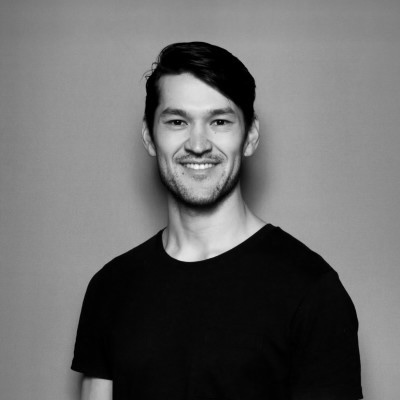
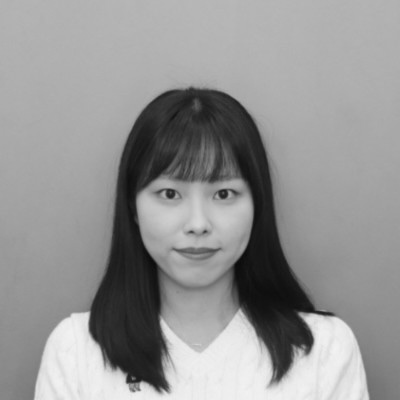
The (human) team behind the agents.


.webp)







Build the future of work with us.
For workers. Talent leaders. Policymakers. Funders. Everyone on the human side of AI.